P.O Box 61, Mpigi| Tel :+256 772 440682 | E-mail: [email protected]

GOMBA DISTRICT RECEIVES 1,200 BAGS OF O.N.E. FERTILIZER TO BOOST COFFEE PRODUCTION
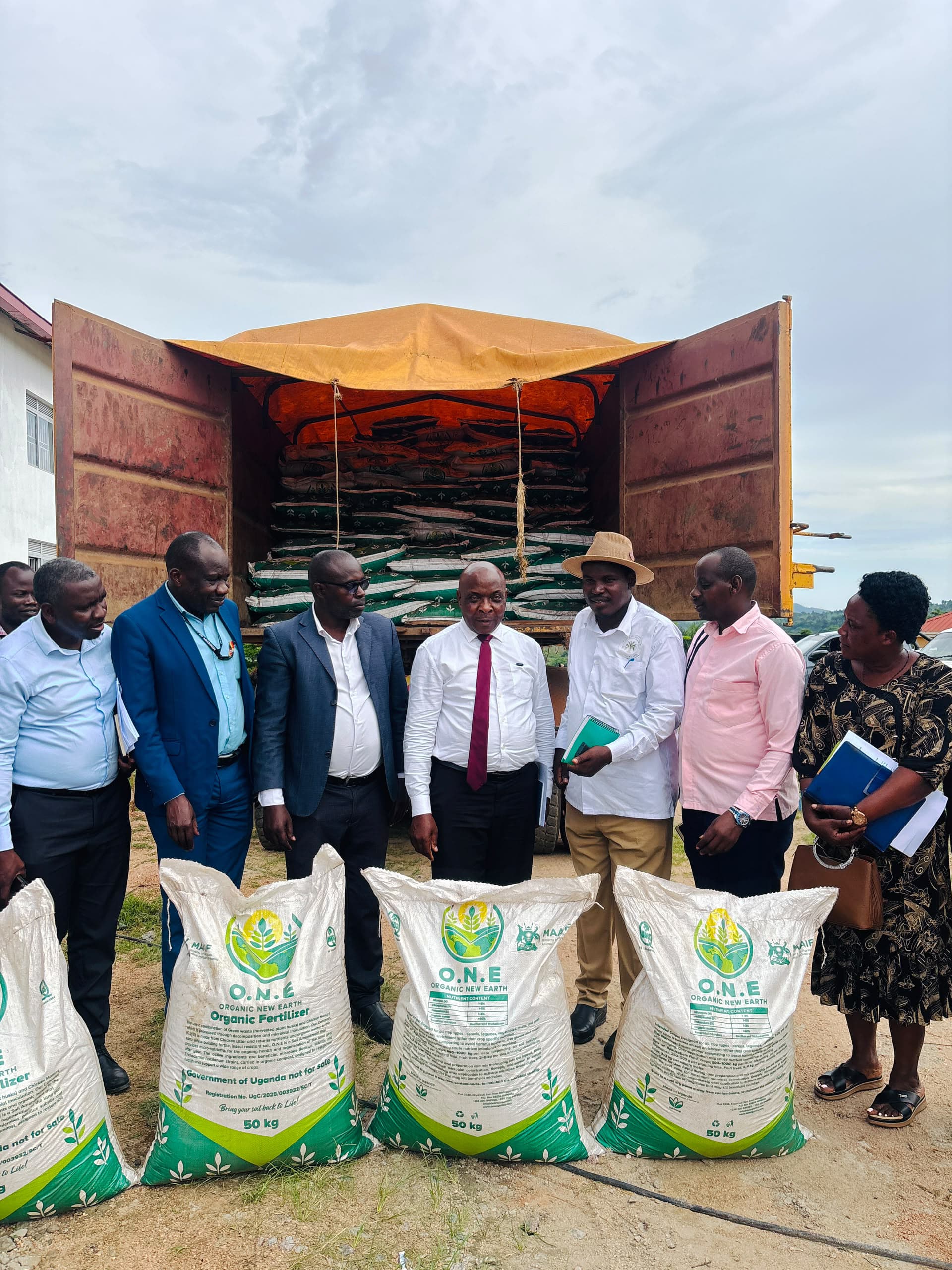
Gomba District has received 1,200 bags of Organic New Earth (O.N.E.) fertilizer, each weighing 50 kilogrammes, from the Ministry of Agriculture, Animal Industry and Fisheries (MAAIF) to support local farmers, boost coffee production, improve livelihoods and enhance household incomes.
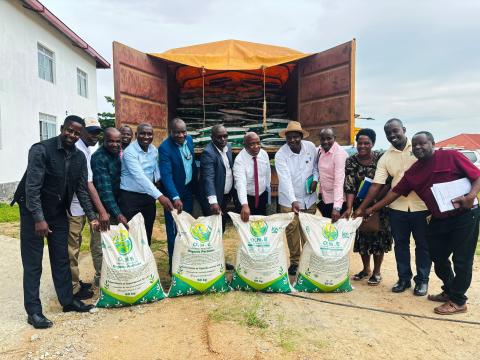
The delivery which happened on 19th October 2026 at the district headquarters Tondola , totalling 60,000 kilogrammes of fertilizer, is intended to strengthen agricultural production and support farming communities across the district. The intervention places emphasis on coffee production, an important income-generating activity for many households, and is expected to help farmers improve productivity through better crop management.
The initiative also reflects the importance of government support in strengthening agriculture and improving the welfare of rural communities. For farmers to benefit fully, the availability of agricultural inputs needs to be accompanied by proper use, technical guidance and effective coordination among the relevant stakeholders.
Chief Administrative Officer (CAO) Eswilu Donath welcomed the fertilizer delivery, describing it as an opportunity to strengthen agricultural production and improve the livelihoods of farming households in Gomba.
In his remarks, the CAO emphasised the need to ensure that government support translates into tangible benefits for the intended beneficiaries. He called for responsible management of the agricultural inputs and coordination between district technical officers and other stakeholders to support the intervention’s objectives.
He also encouraged farmers to make productive use of the support and embrace good agricultural practices that can help improve crop performance and household earnings. The district administration’s role, he noted in the proposed summary, includes supporting effective implementation and ensuring that agricultural interventions contribute to local development.
Resident District Commissioner (RDC) Katende Ronald also welcomed the delivery, highlighting accountability and proper management as important elements in the implementation of government-supported programmes.
In his remarks, the RDC stressed the need for transparency in handling agricultural inputs and ensuring that they reach their intended beneficiaries. He encouraged the relevant officials and stakeholders to work together to ensure that the intervention achieves its purpose of supporting farmers and improving agricultural productivity.
LCV Chairperson Abigaba George welcomed the support, noting that agriculture remains central to the livelihoods of many households in Gomba District.
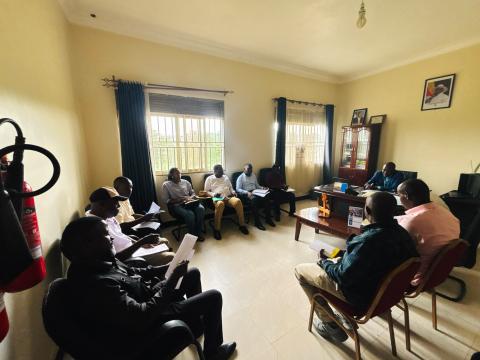
In his remarks, the district chairperson emphasised the importance of supporting farmers to improve production, strengthen household incomes and contribute to the district’s economic development. He encouraged continued cooperation between government and local leadership in addressing farmers’ needs and promoting better agricultural performance.
He further highlighted the potential for improved coffee production to create better economic opportunities for farming households, particularly when farmers apply appropriate practices and manage their farms effectively.
District Production Officer (DPO) Kiddu Ben emphasised the importance of proper fertilizer use and sound agronomic practices in achieving better agricultural results.
In his remarks, the DPO encouraged farmers to seek guidance from agricultural extension workers and follow recommended practices for applying and managing agricultural inputs. He noted that the benefits of fertilizer depend not only on its availability but also on its correct use, good crop management and continued technical support.
Farmers’ cooperation with extension personnel will therefore be important in helping them make informed decisions and improve the management of their coffee gardens.
The delivery of 1,200 bags of O.N.E. fertilizer marks a significant intervention in Gomba District’s efforts to support local agriculture, particularly coffee production. Through collaboration among MAAIF, district leadership, technical officers and farmers, the initiative aims to improve productivity, strengthen livelihoods and enhance household incomes.
The district’s focus remains on ensuring that agricultural support delivers practical benefits to farmers and contributes to sustainable community development.
Sunday, October 18, 2026
Event date:
Monday, October 19, 2026
Image: